
 انضم لنا على فيسبوك
 جديد المنتدى
 تابعنا على تويتر
 تابع أعمالنا على يوتيوب
 تابعنا على جوجل بلاس
 تابعنا على اينستغرام
 تابعنا على بينتريست
 تابعنا على سكريبد
 تابعنا على سلايدشير
 تابعنا على ساوند كلاود
 تابعنا على تامبلر


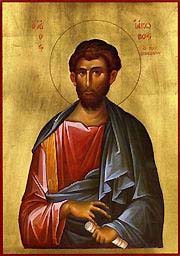
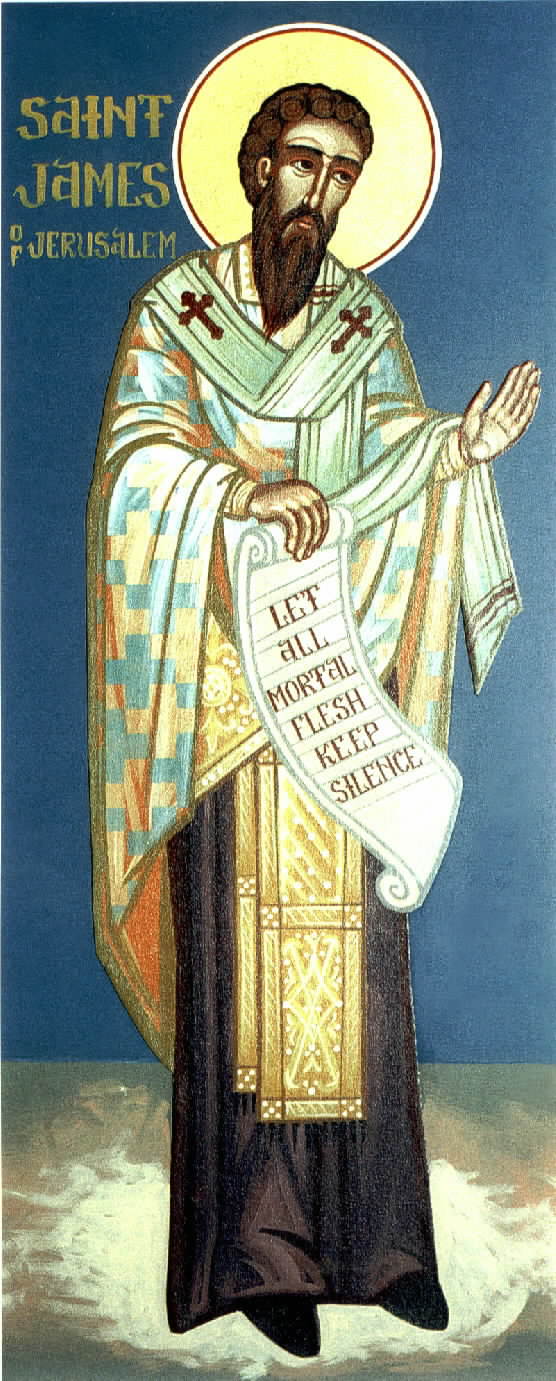
 James The Greater
JamesThe Greater[FRAME="13 70"]
He is the Apostle referred to in the Gospel as "Judas of
James", "Judas not the Iscariot". He also is known as
Thaddaeus or Lebbacus. Jude was the brother of James (or
the son of James RV), the "brethren of the Lord" - the
Lord's relative. Jude is the author of the Epistle of
Jude. The Apocryphal "Passion of Simon and Jude" depicted
them in Persia where they preached and underwent martyrdom
The exact order of selection by the Messiah of the divine
twelve who were to serve as his disciples is hardly a
subject for debate in view of their proximity to the
divine, but there has been slight confusion as to whether
or not the eminent Saint Jude was the tenth or eleventh
choice. Had the great Saint Jude been chosen last out of
thousands rather than twelve, he would have served withthe distinction that places his exalted name in the New
Testament. Generally Saint Jude is accepted as the tenth
chosen by the Savior because it is mentioned in the
Gospel of Mark 3.18
One account has Saint Jude as the son of Alphaeus with
the surname Thaddeus, an another refers to him as the
son of James (Iakovos); but he could have been given a
hundred names and it would have mattered little, because
in his one lifetime he served the Lord as well as a
hundred men combined. Known to us as the author of James
the Less, his Epistle is carried in the New Testament
wherein he addressed himself to the members of the New
Faith, commencing with the words, "Jude, the servant of
Jesus Christ and brother of James..." Church historians
are responsible for the emphasis on the addition of the
name Iscariot to Judas, the betrayer of the Savior, to
assure that his name not be confused under any
circumstances with the noble Saint Jude
The presence of Saint Jude in so many places in his swift
rounds of missionary work for Jesus Christ might have been
a contributing factor in the confusion of his name. He was
much less interested in identifying himself than with
bringing forth the identity of the Son of God and making
His name a household word. This evidenced in his frenetic
pace in bearing the torch of the truth of Jesus Christ
through the lands of Judea, Galilee, Samaria and
Mesopotamia. One of the countries visited has a name that
has remained unchanged down through the centuries.
Although Saint Gregory the Illuminator is credited with
having Christianized this nation, the country of Armenia,
the first to make Christianity its national religion,
Armenia was approached in the time of Christ by Saint Jude
accompanied by his devoted friend Bartholomew. It was
here in Armenia that Saint Jude established himself as
the true kinsman of Jesus Christ he was reputed to be.
The country's King Agbar was stricken with the deadliest
disease of the time, the dreaded leprosy, and in
desperation sent out word that he be attended by the
greatest healer of them all, Jesus of Nazareth, about
whom he had heard so much. Before this could be carried
out, the Messiah was put to death on the Cross, and acting
as his earthly vicar, Saint Jude answered the call. In
the name of the Lord and through the power of the divine,
the hand of Saint Jude was placed on the ailing king who
was cured of his disease and thereafter baptized a
Christian
The power of healing impressed the general populace but put fear into the hearts of other governing rulers who viewed Saint Jude, already acknowledged to be related to the Messiah as brother of James the Less. Since the Messiah was of the house of David and for years his presence symbolized to the ruling class a complete loss of their power, and since Saint Jude was a living symbol of their being driven from office, Saint Jude was sought out, together with any who kin to him, as enemies of the state. In one convincing statement, however, Saint Jude set aside the fears of the aristocracy and assured the safety of his family with the simple declaration that their concern was with the kingdom of Heaven, which was not of this world
He was echoing the words of the Savior so recently put to brutal death. The statement was not enough for some
of the less convinced, and not too long after the miracle of healing, the noble Saint Jude was martyred in a city
called Arand, near Beirut. This magnificent disciple is
commemorated on June 19
[/FRAME]

 رد مع اقتباس

المفضلات