
2:3 - Teaching parents
This is the faith of the Orthodox and Catholic Churches. The definition of the Fourth and Sixth Councils was negative (1) because the human mind is incapable of understanding […]
This is the faith of the Orthodox and Catholic Churches. The definition of the Fourth and Sixth Councils was negative (1) because the human mind is incapable of understanding […]
A - The First and Second Councils The First Council was held in Nicaea (Turkey) in the year 325 under the presidency of Eftsatius of Antioch (according to what investigators believe).
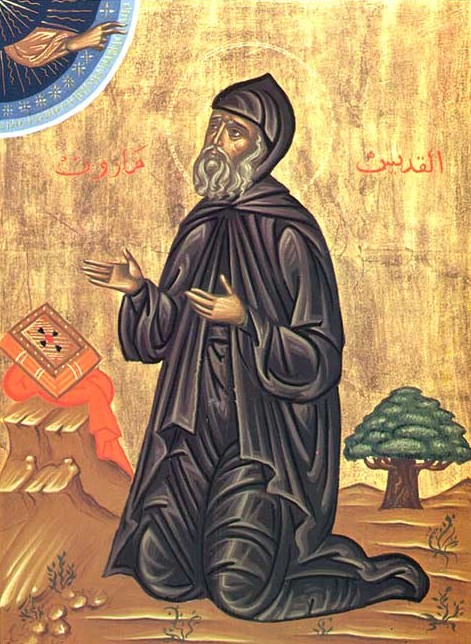
There is a mention in the history of the saints of a hermit saint named Marun who died in the beginning of the fifth century AD. “Marun”, in Syriac, is a diminutive of the word
The Church is of course “apostolic,” but it is also patristic. It is essentially the “Church of the Fathers.” These two “characteristics” cannot be separated, and because it is “patristic,” it is truly “apostolic.” The witness of the Fathers is more than a historical feature, more than a voice from the past.
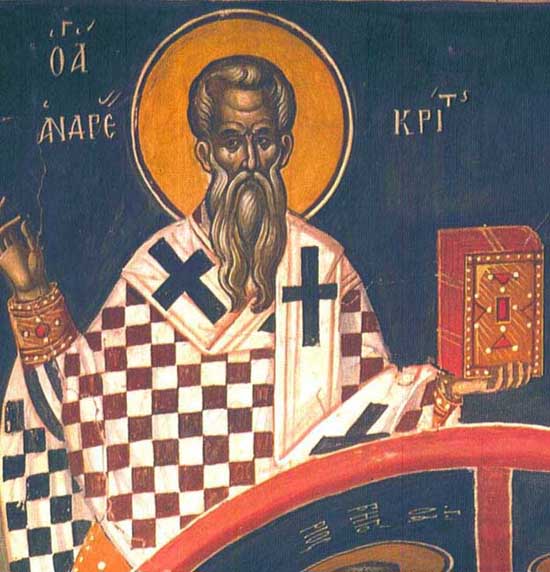
Saint Andrew was born in Damascus, Syria, during the days of the Arab invasion, around the year 660, from a virtuous, pious family. His father’s name was George.
Every essence has its own will and action: Therefore, since Christ has two natures, he also has two natural wills and two natural actions, and since the hypostasis of his natures
The beginning of the use of icons: The historian Eusebius narrates that he saw a statue of the Lord Jesus in Banias, Mount Hermon, and that he saw real icons of the apostles.
1- The purpose of the incarnation: “the hidden wisdom which God predestined before the ages for our glory” (1 Corinthians 2:7). “The secret hidden from time immemorial lies in God, the Creator
The Fatimids and the Church 843-1025 The name and title of the Church: The Egyptian Jacobites criticized Timothy, the Patriarch of Alexandria (460-482), for saying the king’s words at the Council of Chalcedon (451), so they called
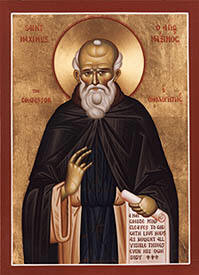
His life: The seventh century was also a century of turmoil, wars, and religious problems. After Eutyches, the heresy of nature and one will came in a period
Constantine IV: (668-685) Constantine III thought poorly of his brother Theodosius, so he dressed him as a monastic and then ordered him killed. So his conscience aroused him and he became
Justinian II: (685-695) Constantine IV died on the first of September in the year 685, and his son Justinian of Ashram, Rhinometos, assumed the throne after him.