
Veneration of Holy Relics and Relics of Saints in the Orthodox Tradition
Chapter One: The Theological Concept of the Relics of Saints A- A General Concept of the Phrase “Relics of Saints”: The word “relics” in Greek and in Latin […]
Chapter One: The Theological Concept of the Relics of Saints A- A General Concept of the Phrase “Relics of Saints”: The word “relics” in Greek and in Latin […]
In the incarnation everything is realized. Or rather, God Himself, who is everything, is present. Instead of symbols and figures, instead of shadow, He comes in Him.
We do not disagree with the Baptists that the New Testament called the struggling believers “saints.” But we disagree with them on many matters, including: ways to achieve holiness, and truth
The person who is enlightened by the uncreated divine actions “has the knowledge of the glory of God, that glory which is on the face of Christ, shining in his heart, and he becomes a “partaker of the divine glory” and a “participant in the holiness of God.” The Christian who lives in the grace of God becomes a “member of the body of Christ,” that is, a part of the body of the incarnate God, living the life of Christ himself and radiating the divine light.
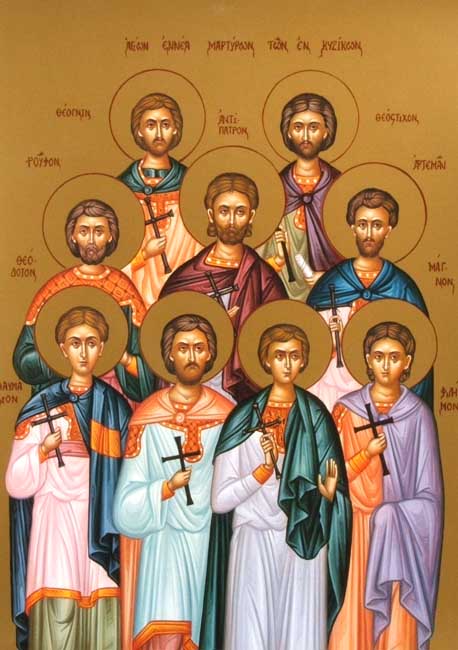
They are Theognetus, Rufus, Antipatros, Theosticus, Artamon, Magnus, Theodotus, Thomasius, and Philemon. They came from different places and their ages varied. Their positions in society varied
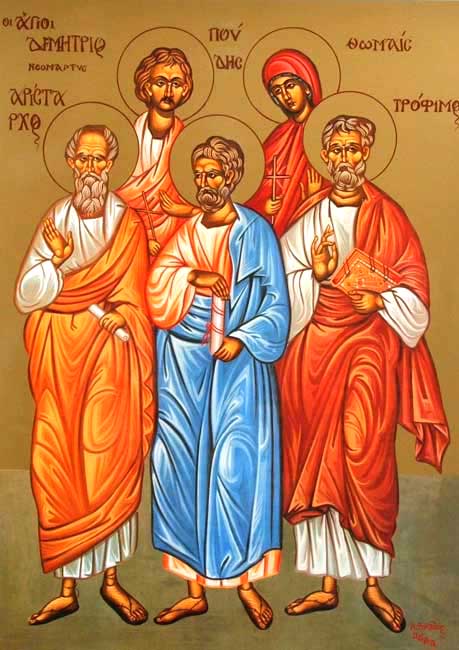
They are among the seventy apostles and were students of Saint Paul the Apostle.
This saint’s name was “Ruh” before he was converted to the Christian faith. He was one of the nobles of the city of Damascus, and he lived near a monastery
(Christ loved the church and gave himself for it) (Ephesians 5:25). (The church is one with the Lord. She is his body, his flesh, and his bones. The church is the vine.
The divine service and prayers of the Orthodox Church sing of the holiness of God. He is “the One Holy One” to whom every knee bows at every time and place.
Saints: When the Apostle Paul calls Christians “saints,” he means that they are “set apart.” When Peter describes the church as a “priestly assembly,” he means that they are “set apart.”
The title of the book with the content of the first and second parts. 1. The first chapter: An introduction to what happened between Ignatius and Photius, Patriarch of Constantinople.
The divine and apostolic tradition constitutes the general balance of all the faith of the early churches, which remains the basis of the constitution of faith of the entire universal Church. We have mentioned it