[glow=FFFF00]The Church of Panagia of Blachernæ[/glow]
The best known and most celebrated shrine of the Holy Virgin in Constantinople was the church of Panagia of Blachernæ. The history of the shrine, the fame of which had spread throughout the Christian world, extends over the entire Byzantine era, and the great events associated with it are linked with the history of the City.
The first church at the site of the sacred spring was built and decorated by the Augusta Pulcheria between 450-453 (the year of her death) and her husband, the Emperor Marcian (450-457). The church was completed and embellished further by the Emperor Leo I (457-474), who added the Hagiasma (fountain of holy water) and the Hagion Lousma (sacred bath). Leo I also built the parecclesion of the Hagia Soros to house the holy mantle and robe of the Virgin that had been brought from Palestine to Constantinople in 473. It was then that the church was endowed with large estates. Procopius writes that Justinian, during the reign of his uncle Justin I (518-527) had altered and improved the original building. Procopius's description suggests that the basilica was given a dome supported by columns forming a semicircle. This renovation is mentioned in two epigrams of the Palatine Anthology.
At times, Emperors showed their personal interest for the church by making donations and adding new constructions and decorations. Justin II (565-578) added two apses remodelling the plan into a trefoil transept, and some centuries later Romanus III Argyrus (1028-1034) decorated with gold and silver the intrados of the arches. A measure of the importance of the shrine is found in Emperor Heraclius's Near a, which appoints a total of 74 persons to the service of the church: 12 presbyters, 18 deacons, 6 deaconesses, 8 sub-deacons, 20 readers, 4 chanters and 6 doorkeepers.
The role played by the Panagia of Blachernæ during the Iconoclast crisis, particularly in the reign of Constantine V, should be stressed. Like the Hagia Sophia, this church was a centre of Orthodox worship where every Friday an all-night vigil was dedicated to the miracle-working icon of the Virgin. Because of this, the whole iconographic programme of the church was destroyed by the iconoclasts. In the Life of St. Stephen the Younger, a contemporary work written in 808, it is recorded that the iconoclasts replaced the images of Christ, the Virgin and Saints with representations of trees, birds and animals: «Having ruined the venerated church of the Immaculate Theotokos of Blachernæ, the walls of which had been painted with varied iconographic subjects from God's Incarnation and His many Miracles to His Ascension and the Descent of the Holy Spirit, thus exalting Christ's mysteries, they turned it into a place of fruit-storing and ornithoscopy. They decorated it, to tell the truth indecorously, with all kinds of trees and birds and wild beasts and other animals within roundels of ivy-leaves, and cranes and crows and peacocks».
The disappearance of the historic icon of the Virgin, painted on wood and revetted with gold and silver, is dated to those years. According to tradition, the icon was discovered hidden behind a wall in 1030, when the Emperor Romanus III Argyrus was renovating the church.
The iconographic type of the Virgin Blachernitissa was already established by then and had spread throughout the Christian world. In this depiction the Mother of God is portrayed full-length in a frontal attitude, Her hands raised in prayer. The figure of Christ making the sign of blessing is painted within a medallion on Her breast. The icon of the Virgin Blachernitissa is associated with the miracle of the veil that covered the Virgin's face and was raised on certain occasions, as recorded in the writings of Anna Comnena.
In 1070 a fire destroyed the church, which was rebuilt by the Emperors Romanus IV Diogenes (1067-1071) and Michael VII Ducas (1071-1078). The entire complex of buildings was ruined in 1434, shortly before the Conquest, when «some young noblemen wishing to catch nestlings» (G. Phrantzes) climbed on the roof and inadvertently started a fire.
The best known and most significant historic event occurred in 626, when Constantinople was besieged by the Avars while Emperor Heraclius and his troops were campaigning against the Persians in Asia Minor. The icon of the Virgin Blachernitissa was carried along the battlements in a procession headed by the son of the absent Emperor and the Patriarch Sergius (610-638). The Avars raised the siege and the saving of the City was attributed to the direct intervention of the Mother of God. The entire population gathered at the church with the famous icon and in an all-night vigil they sang standing the Akathistos Hymn in praise of the Virgin Mary.
In 834 the Iconoclast movement collapsed and the Feast of Orthodoxy commemorating the restoration of icons was celebrated for the first time at the church of Blachernæ. Tradition has it that in 944 the image of Christ (known as the Holy Mandylion) and the letter of King Abgar were brought from Edessa and placed in the parecclesion of the church.
After 1204 the shrine passed into the hands of the Latins until John III Ducas Vatatzes (1222-1254), Emperor of the Nicaean Empire, purchased from the Catholics the church of Panagia of Blachernæ along with many other monasteries of Constantinople. In 1348 Genoese pirates caused damages to the shrine.
From the surviving sources we learn that the church of Blachernæ was located near the shore of the Golden Horn, outside the city walls. To protect it, Emperor Heraclius built a defence wall around the shrine. Later, when the Palace of Blachernæ was erected further up on the slope of the hill, a special gate and stairway connected the church with the Palace. Emperors often attended services at the Panagia of Blachernæ and showed their interest and respect for the shrine in many ways. Campaigning Emperors are known to have carried an icon of the Panagia of Blachernæ and a great number of imperial seals bear the image of the Blachernitissa.
The litany celebrated every Friday at the church of St. Mary in the Chalkopratiae with the icon of the Virgin Blachernitissa had been established since the time of the Patriarch Timothy I (511-518). Some other feast-days were commemorated with special pomp at the church of Blachernæ: The Presentation of Christ in the Temple (2nd February), the Feast of Orthodoxy (First Sunday of Lent), Good Friday, Easter Tuesday, the ceremony for the Virgin's Veil (2nd July), the consecration of the church (31st July), the saving of the City from the Avars and the Persians (7th August), the Dormition of the Virgin (15th August) and the event of the terrible earthquake of 740 (26th October).
The shrine of Blachernæ, «the great church» as it is called in written sources, was composed of three buildings: the main church, the parecclesion of the Hagia Soros and the Hagion Lousma.
The church was a three-aisled basilica with a timber roof, like the similar churches of Panagia in the Chalkopratiæ and of St. John the Baptist of Studius. It appears that after its destruction by fire in 1070, the church was rebuilt on the same plan. The interior decoration consisted of marble revetments to about half the height of the walls, columns of green jasper, and a finely worked gold and silver ceiling. The upper parts of the walls were decorated with wall paintings and mosaics depicting scenes from the Christological cycle. The silver ambo was placed at the centre of the nave and the splendid iconostasis was most impressive. Information on the magnificent iconography and the general decoration of the church has been preserved in the writings of the Spanish ambassador De Clavijo, who visited Blachernæ in 1402, and in a later work entitled Lament on the disappearance of the splendid church, by Isidore of Kiev (1385-1463).
The parecclesion of the relics, known as parecclesion of the Hagia Soros, was a circular structure with a narthex, built to the south of the sanctuary of the main church. In addition to the mantle, veil and girdle of the Holy Virgin, it contained the venerated relics of many saints. Russian pilgrims of the 14th and 15th century describe the relics and mention those of St. Patapios, St. Athanasius, St. Pantaleon and St. Anastasia.
The Hagion Lousma, a domed structure communicating with the parecclesion, included the apodyton (vestry), the kolymbos (basin) and St. Photeinos. Its walls were decorated with icons, with that of the Virgin placed in a special niche. Every Friday the Emperor bathed in the basin. Written sources provide detailed descriptions of the bathing ceremony: «... finally they enter St. Photeinos in the innermost part of the domed structure and light tapers in front of the marble icon of the Theotokos, from whose hands the holy water flows out...».
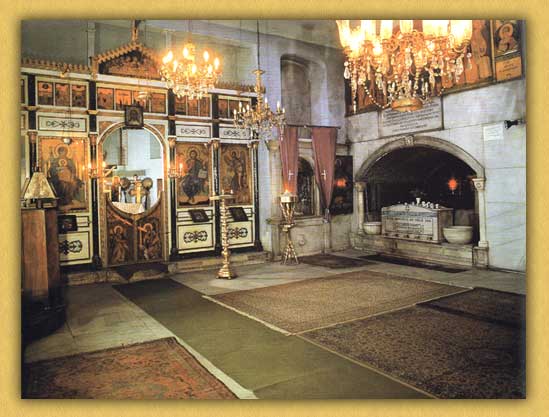
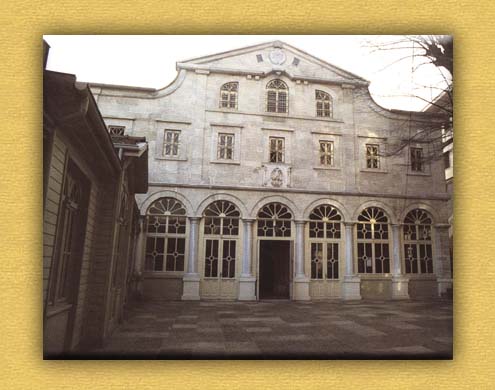
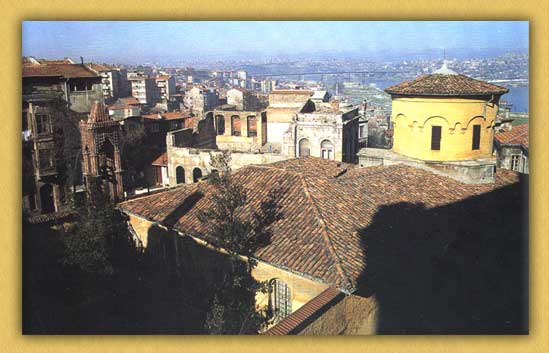
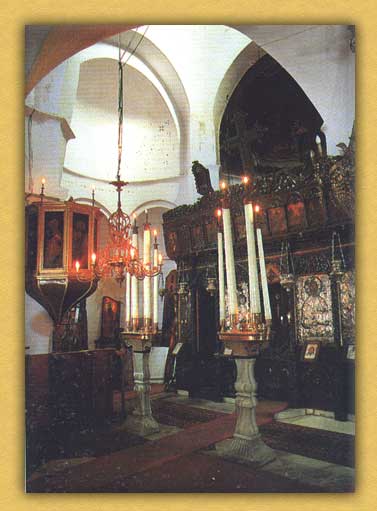
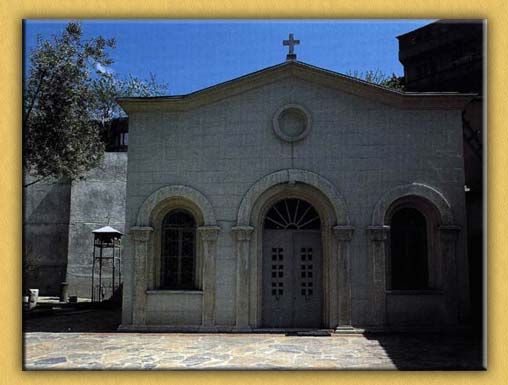
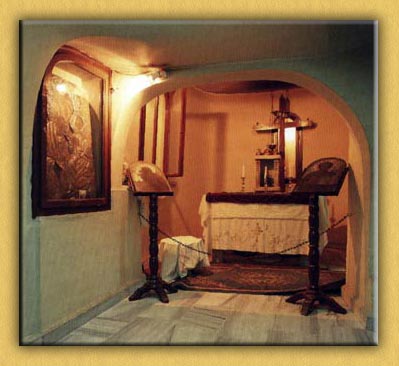
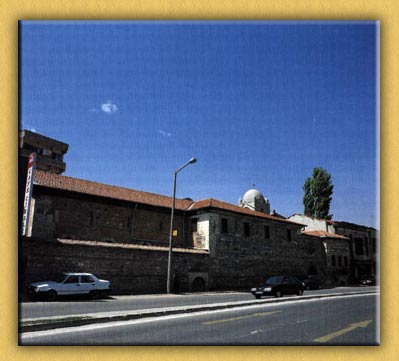
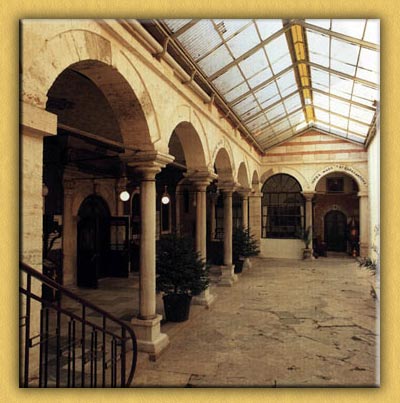
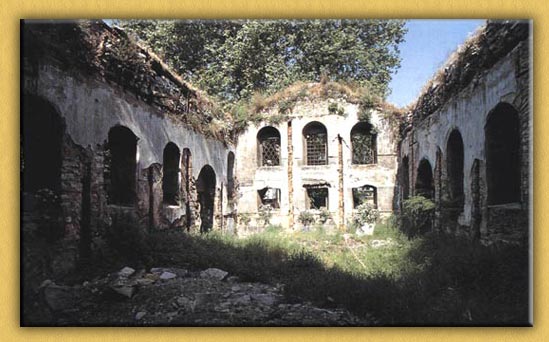
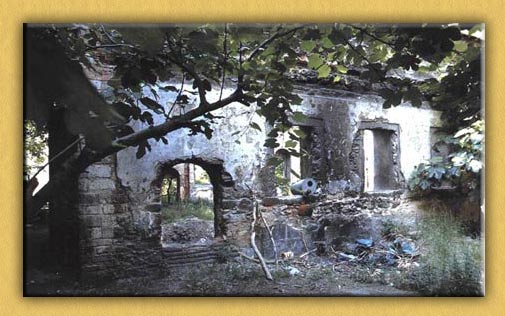
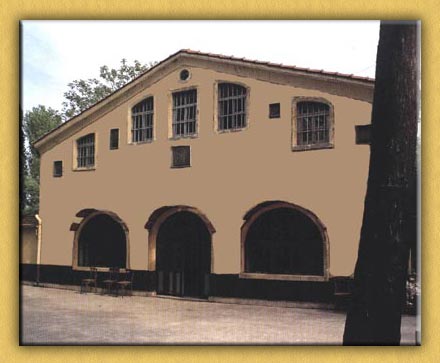
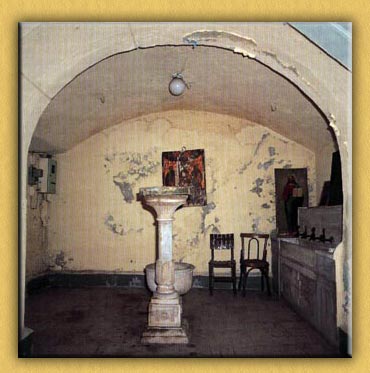
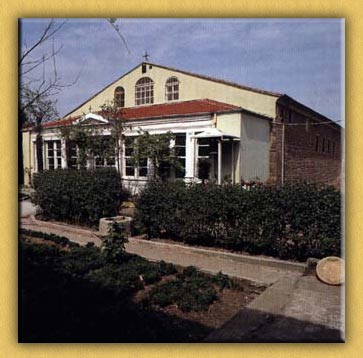
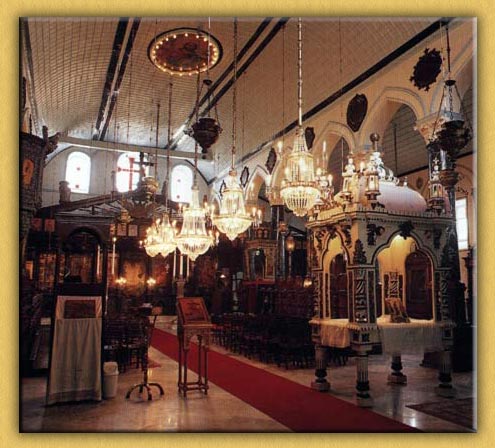
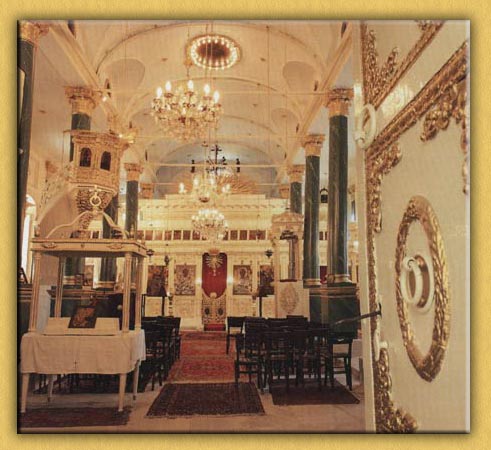
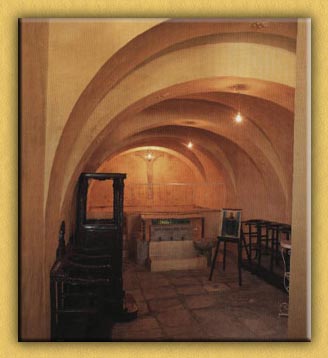
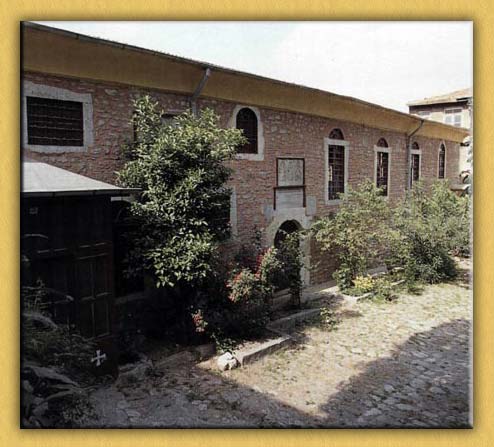
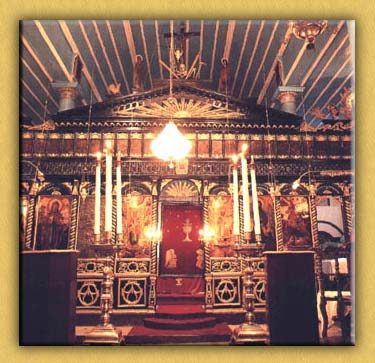
After the destructive fire of 1434 and the Fall of Constantinople, nothing remained from the once rich and famous shrine except for the site of the Sacred Spring. The place passed into Ottoman hands until 1867, when it was purchased by the Guild of Greek Orthodox Furriers, who built a small church containing the hagiasma. As time went by, the Ecumenical Patriarchate made certain additions and the ancient sacred enclosure was given the aspect it has today. In the small church, the four wall paintings by Eirenarchos Covas (1964) above the hagiasma are reminders of great moments in the history of the Orthodox Church.
Future excavations in the wider area of the Panagia of Blachernæ may lead to the discovery of the ruins of the great Byzantine church.
Athanasios Paliouras

 انضم لنا على فيسبوك
 جديد المنتدى
 تابعنا على تويتر
 تابع أعمالنا على يوتيوب
 تابعنا على جوجل بلاس
 تابعنا على اينستغرام
 تابعنا على بينتريست
 تابعنا على سكريبد
 تابعنا على سلايدشير
 تابعنا على ساوند كلاود
 تابعنا على تامبلر


 Archdiocese of Constantinople



 رد مع اقتباس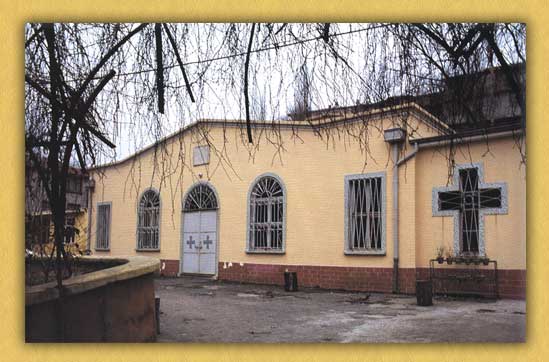



المفضلات