
Beliefs of Jehovah's Witnesses in the church tradition
Jehovah’s Witnesses say that our only reference is the Bible, and they reject the Church’s interpretation of this book and reject the holy councils that clarified the faith […]
Jehovah’s Witnesses say that our only reference is the Bible, and they reject the Church’s interpretation of this book and reject the holy councils that clarified the faith […]
A - The First and Second Councils The First Council was held in Nicaea (Turkey) in the year 325 under the presidency of Eftsatius of Antioch (according to what investigators believe).
History of the Schism - Part One A book that includes the history of relations between the Eastern and Western churches from the first century to the era of the Patriarch.
Baptists admit that they “do not agree with each other” in the smallest details, and that they do not have a “Baptist doctrine,” or a “historical Baptist belief.”
The idea that the Orthodox Church adheres to the principles and piety of the ancient, universal, indivisible Church is the central principle of this Church.
The heavenly birth that Christ speaks of is “the washing of regeneration and renewal that comes from the Holy Spirit,” that is, receiving the Holy Spirit through baptism in the name of the Holy Trinity. It is the presence of the Holy Spirit that renews the birth of man. This presence takes place within the Church through the sacrament of baptism and the other sacraments.
The truth of salvation in Christ is not a rigid letter that can be preserved in a book. It is a treasure that the Lord gave to the apostles so that their union would be the sure guarantee of their possession of the truth of salvation. The apostles passed this treasure on to the bishops so that they might complete the mission, in their union with the Church - the Body of Christ, where the Holy Spirit works. In doing so, they do not express their own opinion, but the will of the Holy Spirit who dwells in the Church.
The Church is of course “apostolic,” but it is also patristic. It is essentially the “Church of the Fathers.” These two “characteristics” cannot be separated, and because it is “patristic,” it is truly “apostolic.” The witness of the Fathers is more than a historical feature, more than a voice from the past.
“آباء الكنيسة” لم يتصرفوا كأفراد فقط، بل كرجال كنسيين، بالنيابة عن الكنيسة وباسمها. فهم الناطقون باسم الكنيسة ومفسِّرو إيمانها وحافظوا تقليدها وشهود حقيقتها وإيمانها ومعلِّمون بارزون، وعلى هذا الأساس يقوم سلطانهم!
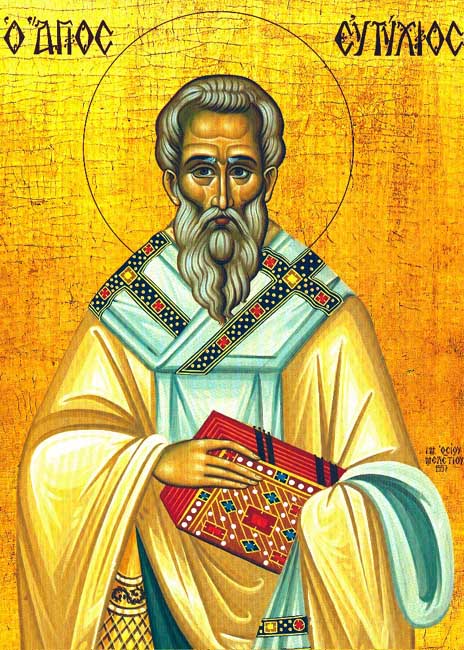
Saint Eutychius was born in a town in the province of Phyrgia called “Divine”. He received his Christian upbringing at the hands of his grandfather, the priest, who was imprinted in
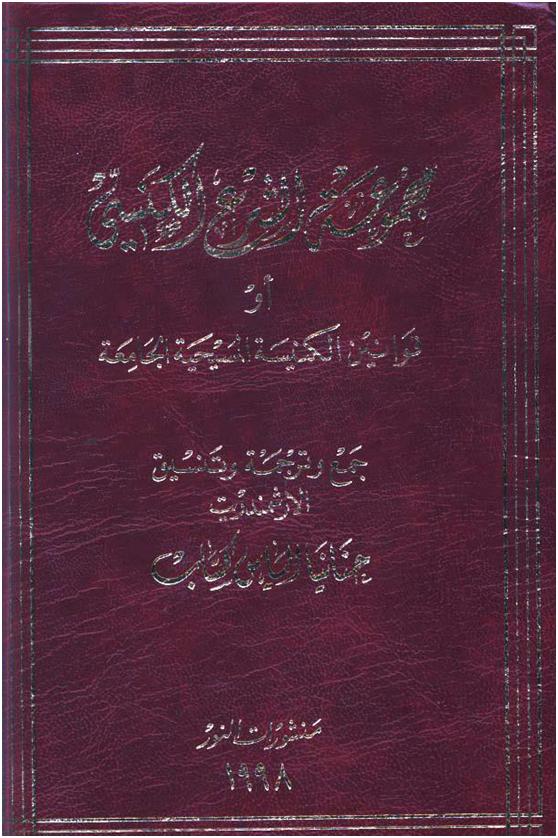
In our hands is a precious book, which includes a collection of church laws enacted by the apostolic councils, ecumenical and local councils, and patristic laws with their explanations. The Church
(Christ loved the church and gave himself for it) (Ephesians 5:25). (The church is one with the Lord. She is his body, his flesh, and his bones. The church is the vine.