
Fourth Ecumenical Council - Council of Chalcedon
Introduction: After the Law of Unity - which was drawn up by theologians from Alexandria and Antioch - a disagreement arose over some of the expressions contained in it, and that is because there was
Introduction: After the Law of Unity - which was drawn up by theologians from Alexandria and Antioch - a disagreement arose over some of the expressions contained in it, and that is because there was
451 - 518 Emperors: Pulcharia died in the year 453, and then Marcianus died in the year 457. They had no heir. So I headed
Emperor Justinus: Anastasius died on July 9, 518, without a successor. After him, Justinus, one of the commanders of the Imperial Guard, assumed the throne.
The Three Chapters: It happened that there were in the court Theodoros Askidas, Bishop of Caesarea of Cappadocia, and Domitianus, Bishop of Ankara, Edessa, and they were the two Palestinian monks who
Theodoroa died of cancer in the year 548. The matter of Anthimos, Patriarch of Monophysite, was revealed, and it became clear that when he was deposed, he sought refuge with the Empress, so she hid him.
Justinian did not leave a successor and did not partner with anyone in the purple. But he trusted his nephew Justin and consulted him on state matters.
Christianity and Arabic: Arabic, according to the custom of churchmen, is the Roman-Arab state that was established in the year 105 around the city of Bosra and included
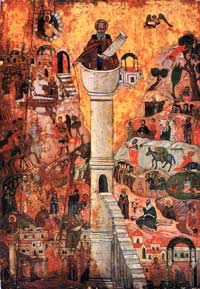
Simeon was born in the village of Sisan, between Syria and Cilicia, in the last quarter of the fourth century. We created a shepherd who became accustomed to silence and contemplation. gesticulate
Justinian and canon law: The fathers in the fourth and fifth centuries were concerned with collecting ecumenical and local laws, but they did not succeed in studying, examining, and coordinating them.
Phocas's arrival to power: The soldiers rebelled in the fall of the year 602 and crossed the Danube under the command of Phocas, one of their officers, and headed towards the capital of the state.
Directing the armies to the Levant: When Abu Bakr finished dealing with the people of apostasy, he decided to direct the armies to the Levant. So he wrote to
Patriarch Macedonius: (628-640) The Jews tortured Anastasius II, successor of the two apostles, captured him, tortured him, and dragged him through the streets of Antioch on the run, and he died as a martyr.