

Part One: Chapter Four: How to understand the book
In order to reach a spiritual, complete understanding of the Book, not just a logical one, through reason alone, there are three basic principles: First: Interpretation of the Book.
In order to reach a spiritual, complete understanding of the Book, not just a logical one, through reason alone, there are three basic principles: First: Interpretation of the Book.
We have proven, above, that the Holy Church has the sole right to interpret the book, not because it was the one that received it (i.e.
Baptists believe that every human soul has “competence (or responsibility) in matters of religion.” In their opinion, every individual “enjoys the freedom to self-test
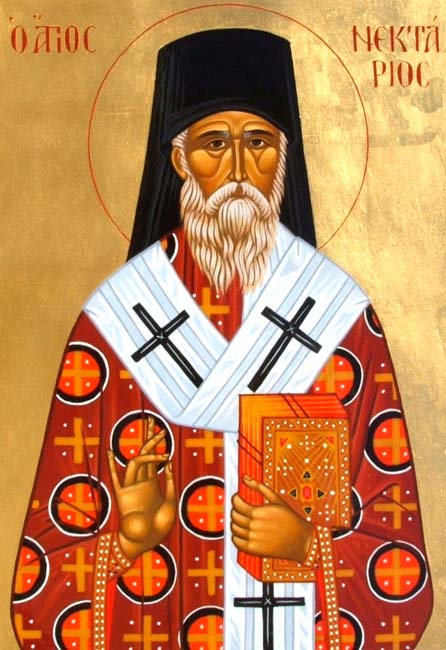
Saint Nektarios, whose name was Anastas Kefalas, was born in Southern Thrace on October 1, 1846 AD. He grew up in a large and poor family, and his mother and grandmother were poor
The truth of salvation in Christ is not a rigid letter that can be preserved in a book. It is a treasure that the Lord gave to the apostles so that their union would be the sure guarantee of their possession of the truth of salvation. The apostles passed this treasure on to the bishops so that they might complete the mission, in their union with the Church - the Body of Christ, where the Holy Spirit works. In doing so, they do not express their own opinion, but the will of the Holy Spirit who dwells in the Church.
The problem of the correct interpretation of the Bible remained acute until the fourth century during the Church’s conflict with the Arians, and it did not lessen in intensity than it was in the second century during the resistance of the Gnostics, the Sabalians, and the Montanists. All parties to the conflict resorted to the Bible, to the point that the heretics cited—and still do—its chapters and verses and resorted to its authority.
The Bible does not contain all the historical, legislative and devotional texts that exist, but rather a select few of them. This select few became authoritative through their use - especially in the liturgy - in the community and through the value given to them by the Church.