You are here: Main » Liturgy

Liturgy

Typikon

The Book of Typikon: That is, the arrangement of church duties. It includes how to carry out all church duties, prayers, and celebrations throughout the year. It has been printed.

3:5 – Liturgy

In order to better understand the meaning of liturgy and its true, comprehensive dimensions, we must start from its concept as a relationship between God and man. So who

Chapter Twenty-Eight - The Ritual Year

The life of the saints is the life of Christ himself, continuing throughout the ages. We are united to them on the basis of the human nature that Christ reformed through his incarnation, death and resurrection. In the divine liturgy, and especially the Eucharist, we participate in the life of Christ and its events and in the life of the saints, because we are all one body, Christ, the saints and ourselves, and we are all “one in Christ Jesus.”

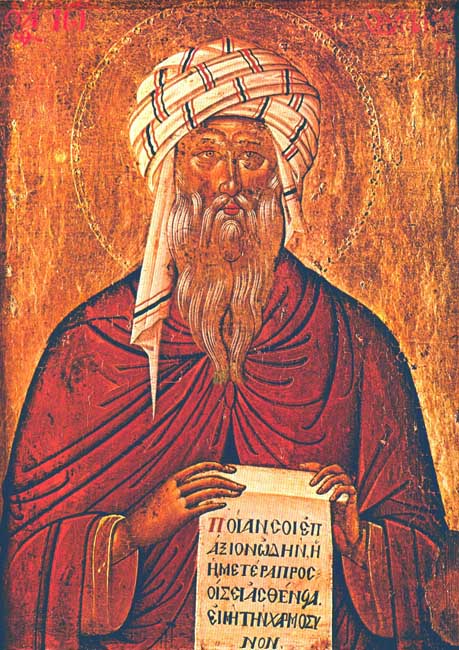
Saint John of Damascus

John Damascene

Mansour ibn Sarjun, the name of Saint John, was born around the year 655 AD in Damascus, the capital of the Umayyads at that time, from an ancient family.

Chapter Seventeen - Reunification

Before Christ's sacrifice on the cross, He offered up a fervent prayer for all who would believe in His name, asking His Father to preserve them in divine unity. These words of Christ are not a call to external unity, but to absolute internal unity, similar to the unity of the three persons in the Holy Trinity, that is, to the unity that man lost because of the fall. They are based on the three persons and are represented by them, and signify man's salvation and perfection.

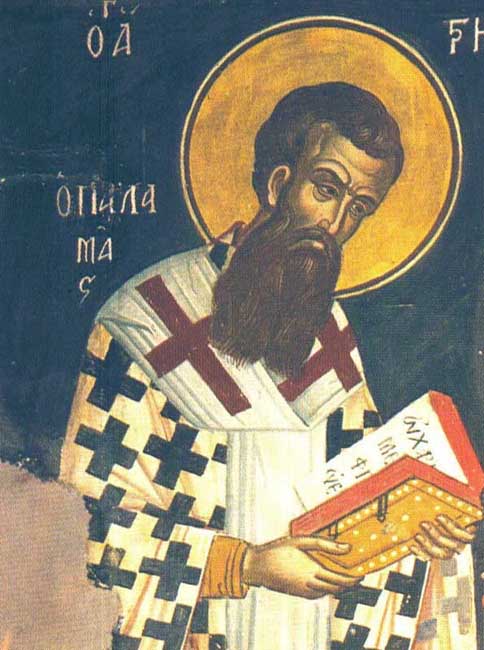
Saint Gregory Palamas

Gregory Palamas the Wonderworker

The life of our righteous father in Saints Gregory Palamas, the miraculous and brilliant archbishop of Thessaloniki in the fourteenth century. He wrote a biography

Chapter Five: The mission of tradition in the ancient church

The problem of the correct interpretation of the Bible remained acute until the fourth century during the Church’s conflict with the Arians, and it did not lessen in intensity than it was in the second century during the resistance of the Gnostics, the Sabalians, and the Montanists. All parties to the conflict resorted to the Bible, to the point that the heretics cited—and still do—its chapters and verses and resorted to its authority.

Scroll to Top