
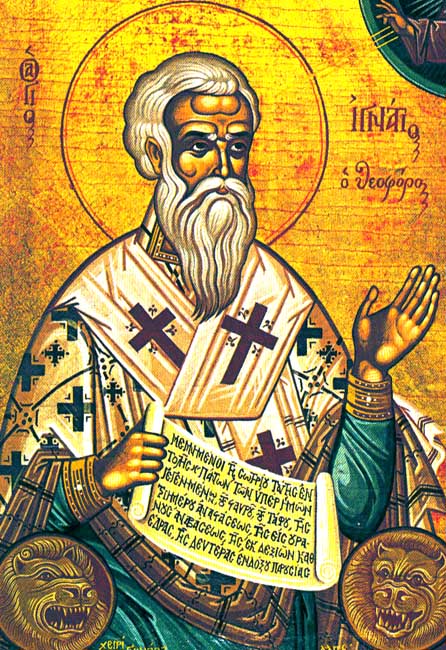
 Saint Ignatius of Antioch: (Ignatius Theophorus, “the God-bearer”). He was a contemporary of Ignatius Evodius, and they may have shared the leadership of the Church of Antioch (Christians of Jewish origin, Christians of Gentile origin) at the same time. (1)Then, after the martyrdom of Evotheus, he continued to head the two churches alone.
There is a tradition that says that the child who came in the Gospel of Matthew 18 is Saint Ignatius, but Chrysostom does not support this tradition and confirms that Ignatius did not see the Lord. Church scholars place his birth in the year 35 and that he was safe in Antioch at the hands of the apostles and disciples, and he took the title of Theophorus - the God-bearer - for himself.
Church of Antioch and Saint IgnatiusDuring the reign of Ignatius, the Roman Empire began to persecute and persecute Christians. The Christian faith began to spread in Rome itself, and this was tantamount to betrayal of the state to the Romans. For them, the religion of the fathers was a covenant that should not be broken. There is another factor that incited the Romans to persecute Christians, which was Jewish complaints, as it made them pay attention to the rapid spread of the Christian gospel in the empire. As for the internal conditions during the reign of Ignatius, they were not better, as the difference between the Jewish and Gentile believers still existed.
His sponsorship policy: The saint was not interested in explaining Christian doctrines (the Holy Trinity and the union of the two natures in Christ), but rather most of his interest was in teaching the Christian faith, preserving it pure, and unifying the ranks of the people of his church - Antioch - and he was the first to use the word “university” (Catholic) to refer to the church and considered it collegial and not presidential. . He also organized the church. In his letter to the Ephesians, he clarifies the priestly ranks, and makes the bishop the head of the local church, saying that he is Christ, and where Christ is, there is the church, and then the elders and making them role models for the believers, just as the apostles are role models for the believers, then the deacons and respecting them as respecting the commandments of God. It makes any work presented to the church without the approval of the bishop unpopular, so it should not be done alone, and it makes the divine sacrifice a sacrament practiced only by the bishop and those authorized by the bishop.
Judgment on the saint: Nero had established a law deeming everyone who professed Christianity an outlaw. This was followed by Vespasianus, Titus, and Domitianus. In the year 99, Emperor Traianus approved the Law of Nero and ordered its implementation. The law was explained to Pliny, the ruler of Bithynia, that anyone declared to be a Christian would be executed unless he renounced his faith. Among those who were martyred as a result of this law was Saint Clement, the third bishop of Rome after the Apostle Peter in the year 100, and Simon, bishop of Jerusalem in the year 107. This law may be what led to the martyrdom of Ignatius Theophorus.
According to tradition, the Roman ruler accused Ignatius of disobeying his orders as a devil, and tempting people to destroy their souls (preaching Christ). The saint answered him that the Roman gods were demons and feared the children of God, and that there was only one God. The governor said to him, “Do you mean Christ whom Pilate hung on the cross?” The saint answered him: It must be said that Jesus, who hung sin and its maker on the cross, gave those who carry him in their hearts authority to crush hell and its power. The ruler said to him: So, are you carrying Jesus in your womb? Ignatius said: There is no doubt about that, because it was said, “I will come among them and walk with them.” The ruler had no choice but to issue his order on January 6, 107, to handcuff Ignatius and send him to Rome to be thrown to the beasts in front of the people. Here the saint exclaimed, saying: Thank you, Lord, because you gave me your complete love and honored me with the restrictions you honored Paul with. Then he prayed for the church, entrusted it, and surrendered himself to the police.
His messages: فانطلق مقيداً بالأغلال ومعه الشهيديّن روفوس وزورسيموس اللذين شملهما الحكم. وفي أثناء سفره من أنطاكية إلى رومة كتب سبعة رسائل إلى الكنائس التي مرَّ بها. التي كانت تشجع على تحمل المحن ومصائب الدهر. ووصلت لنا في ثلاث مجموعات: القصيرة والطويلة والمختصرة. والقصيرة هي الأصلية، وقد حفظت لنا مخطوطة يونانية (القرن الثاني) هذه الرسائل ولا تشمتمل على الرسالة إلى الرومانيين، وأقدم نص يحفظ لنا هذه الرسالة يعود للقرن العاشر. وفي القرن الرابع قام من عُني بها وحرفها فأضاف إليها وجعلها مجموعات تشمل ثلاثة عشر رسالة بدلاً من سبع. فجاء بها علاوةً على الرسائل إلى كنائس: أفسس ومغنيسية وترّلة ورومية وفيلدلفية وأزمير وبوليكاربوس رسائل إلى أنطاكية وطرسوس وفيلبي وهيرون ومريم الكبسولة ورسالة هذه الأخيرة إلى أغناطيوس. وظلت هذه الرسائل موضوع جدل بين علماء الكتاب المقدس والإنجيليين. فقال البعض أنها مزورة، والبعض الآخر صحيحة. ثم جاء Lightfool و Haranck وZahn وFunk ووفّقوا باثبات صحتها بالأدلة الداخلية والخارجية وسكت جميع القائلين بتزويرها. وأصبحت هذه الرسائل من أفضل ما تبقى من آثار الآباء الأولين.
They cited him: The saint arrived in the capital of the empire. It was the date of the Roman closing feasts. The Romans went down to the Flavianus Coliseum to celebrate Trianus' victories and to witness the bloody wrestling between families, criminals, and ferocious beasts. The saint's two companions were martyred in this amphitheater on the eighteenth of December. On the twentieth, the God-bearing saint was stripped of his clothes and thrown to the beasts, which tore his pure body and devoured him. All that remained of his body were the bones, so the believers collected them and sent them to Antioch. So she was buried outside the wall. Then it was transferred in the days of Theodosius the Younger to the remains of the church that was the Temple of Fortuna in the heart of Antioch, and the church was named after him in memory of him. His feast: It was reported that the believers of Rome, after they witnessed his glorious death, stayed up all night praying to the Lord to strengthen their weakness. Then the martyr appeared to them in the form of a fighter who emerged victorious from the battle, and their hearts were filled with joy. The brothers in Antioch designated the day of his martyrdom as a feast for which the church celebrates him. The Orthodox Church still celebrates him on this day. As for the Catholic Church, it moved the feast to the first of February. Perhaps to combine the day of his martyrdom with the day his remains were transferred.
From the sayings of Saint Ignatius:
The provision of salvation through Jesus Christ
يركز القديس اغناطيوس على الخلاص بيسوع المسيح الاله التام والانسان التام. “.. اله متجسد وفي الموت حياة حقيقية ولد من العذراء ومن الله..” (افسس7: 2). و يقول في مطلع رسالته الى اهل ازمير: “أمجد يسوع المسيح الذي جعلكم حكماء. لقد أدركت انكم قد بُنيتم بايمان لا يتزعزع كأنكم مسمَّرون على صليب يسوع المسيح بالجسد والروح وثابتون بقوة في المحبة بدم المسيح الذي هو حقيقة “من نسل داود بالجسد”، وولد حقيقة من العذراء واعتمد من يوحنا “لتتم به كل عدالة”، وسُمِّر من اجلنا على عهد بيلاطس البنطي وهيرودس رئيس الربع، وبثمرة صليبه وآلامه المقدسة وجدنا الحياة، وبقيامته “رفع رايته” فوق العصور ليجمع قديسيه ومؤمنيه في اليهودية وفي الامم في جسد واحد في كنيسته”. وقال ايضا “تحمَّلَ كل هذا من اجلنا ومن اجل خلاصنا. تألم حقا وقام حقا بقدرته. انه لم يتألم ظاهريا كما يقول بعض الجاحدين” (ازمير 2).
ويؤكد في رسالته عينها: “اني أؤمن واعتقد أن المسيح بعد القيامة كان بالجسد. ألم يخاطب بطرس ومن معه قائلا “جسُّوني والمسوني وانظروا اني لستُ روحا بدون جسد”؟ لقد لمسوه فآمنوا فورا واتحدوا بجسده وروحه، لذلك احتقروا الموت وانتصروا عليه” (ازمير 3: 1-2).
The sacrament of thanksgiving and the church
“اياكم والاشتراك بغير سر الشكر الواحد لأنه لا يوجد غير جسد واحد لربنا يسوع المسيح وكأس واحدة توحِّدنا بدمه ومذبح واحد، كما يوجد اسقف واحد مع متقدمين والشمامسة رفقتي في الخدمة، وهكذا كل ما تفلونه تفعلونه حسب الله” (فيلادلفيا 4). “فإذا كنتم جميعكم تجتمعون كواحد… تكسرون الخبزة الواحدة التي هي دواء للخلود، تقدمة مُعدّة لتحفظنا من الموت وتؤمن لنا الحياة الدائمة في المسيح” ( أفسس 20: 2).
“Whoever is far from the altar will be deprived of the bread of God” (Ephesians 5:2). “Whoever refrains from attending church is arrogant and cuts himself off from fellowship. It is written, ‘God opposes the proud’ (Matthew 18:20). Let us therefore beware of the bishop’s resistance if we want to maintain our obedience to God” (Ephesians 5:3). “Try to intensify your meetings to offer your thanks and glorification to God, because Satan’s powers will diminish and his power will dissolve before the agreement of your faith” (Ephesians 13).
Bishop
“Where the bishop is, there must be the parish, just as where Christ is, there must be the universal Church” (Psalm 8:2).
At the beginning of each letter, he speaks about the bishop of the city and the people. He says about the bishop of Philadelphia: “I know that this bishop “did not receive the service of the flock, neither from himself nor from men” (Galatians 1:1), nor for love of vainglory, but for love for God the Father and Jesus Christ. We were captivated by his gentleness. His silence can do much more than pretentious speeches... His calm nature, which does not know anger, makes me know that the virtue of his thought is complete and that he lives with all the meekness of the living God” (Philadelphia 1:1).
The bishop represents Christ in the church and has the obedience of the believers, even if he is a young man, because whoever does not disagree with the opinion of the bishop protects himself from falling into heresy. He says: “None of you should do anything related to the church without the will of the bishop” (Psalm 8:1). “You must be of the same mind with your bishop” (Ephesians 4:1). “I envy you for your permanent connection to your bishop, just as the Church is connected to Christ, and Christ Jesus to the Father, all in complete unity” (Ephesians 6:1).
The bishop supervises the administration of all church sacraments: “Without the bishop, neither baptism nor the feast of love is permissible” (Psalm 8:2). “Men and women who marry must have their union under the authority of the bishop so that the marriage is according to the Lord and not according to desire” (Polycarp 5:2).
Saint Ignatius advises every bishop: “Justify your eminence by your great activity, physically and spiritually, and pay attention to the unity that transcends all good things. Bear with everyone as the Lord bears with you, and bear them with love as you do. Spend your time in constant prayers. Increase your wisdom more wisely, and stay awake with a spirit that does not know sleep. He addressed each one individually so that he might imitate God’s morals” (Polycarp 1:2-3).
And about the Christian in his life and work
“The Christian does not own himself and is not his master. His time belongs to God and he works only for His sake” (Polycarp 7:3). “It is better to be silent and be than to speak and not be.” “It is good for a man to teach; it is more beautiful for him to do what he teaches” (Ephesians 15:1). “If you remain silent, you will not contribute to a better work than this work” (Romans 2:1). “Be Christians, not in name but in reality” (Magnesia 4). “I do not ask you to seek the approval of men, but the approval of God” (Romans 2:1). “Do not put Christ on your lips and the world in your hearts” (Romans 1:7). “If you are willing to do good, God is ready to help you” (Ismir 11:3). “Be long-suffering and gentle toward one another, with the meekness of God toward you” (Polycarp 6:2).
“اعتبروا من يحمل فكرة مخالفة لنعمة يسوع المسيح التي حَلّت علينا مضاداً لفكر الله. مثل هذا لا يهتم لا بالمحبة ولا بالارملة، لا بالفقير ولا بالمضطهَدين، لا بالاسرى ولا بالمعتقين، لا بالجائع ولا بالعطشان. يبتعد عن الصلاة وسر الشكر حتى لا يقرّ بأن سر الشكر هو جسد مخلصنا يسوع المسيح، الجسد الذي تألم من اجل خطايانا والذي اقامه الله الآب بصلاحه. أولئك الذين يرفضون عطية الله يموتون في مجادلاتهم. الافضل لهم ان يطبّقوا ناموس المحبة ليكون لهم مجال في القيامة. احترزوا من هؤلاء البشر ولا تتكلموا عنهم لا في مجالسكم الخاصّة ولا في المجالس العامّة. تعلقوا بالانبياء وعلى الاخص بالانجيل الذي أرانا الآلام كاملة والقيامة محقَّقة. اهربوا من الشقاقات لانها رأس الشرور” ( إزمير 6: 2 و7: 1-2).
Dr.. Asad Rustam
Quoted from: Church of the Great City of God, Antioch
(1) Saint Peter appointed his successor to the throne of Antioch, Saint Evotheus, but unfortunately we have no reason to delve into researching the history of the first successor to the Apostle Peter, but there is a tradition that says that he obtained the crown of martyrdom during the reign of Nero...